
India has performed poorly in removing gender-based disparities, ranking 114 out of 142 countries in World Economic Forum's 2014 gender gap index, scoring below average on parameters like economic participation, educational attainment and health and survival.

Barring a few, such as Andhra Pradesh Chief Minister N Chandrababu Naidu (74), Union Minister C R Patil (69) and Uttar Pradesh Finance Minister Suresh Khanna (71), most other ministers attending the WEF represent the next generation of India's politicians.

In the short run, the Trump presidency has already ensured one thing: The assumptions of the past can no longer guide the strategies of the future, points out Manish Dabhade.
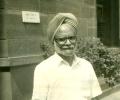
Dr Manmohan Singh first embossed himself on the national consciousness when as India's finance minister he flagged off economic reforms which changed this nation forever.
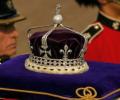
The United Kingdom extracted USD 64.82 trillion from India over a century of colonialism between 1765 and 1900 and USD 33.8 trillion of this went to the richest 10 per cent -- enough money to carpet London in notes of 50 British pound almost four times over.

The travel and tourism sector's contribution to global gross domestic product will return to pre-pandemic levels by the end of 2024, according to a new report by the World Economic Forum (WEF) on Tuesday. This recovery is driven by a considerable increase in worldwide demand, coinciding with more available flights, better international openness, and increased interest and investment in natural and cultural attractions.

Two Indian-origin companies -- Gurgaon-based Vihaan Networks Ltd and Sunnyvae, California-based Bloom Energy -- along with Twitter, are among the 26 companies selected as Technology Pioneers in 2010 by the World Economic Forum on Thursday.

Opposition candidate B Sudershan Reddy appeals to MPs to vote with conscience in the upcoming vice presidential polls, urging them to prioritize the spirit of India and parliamentary traditions over party loyalty.
Soros, 94, in the recent past has spoken openly against Prime Minister Narendra Modi. The ruling BJP believe that he tried to interfere in Indian elections.

General Singh was assigned to receive leaders representing the planet's two superpowers -- the president of the United States and the premier of the People's Republic of China.
The World Economic Forum will develop a composite index to rank the growth and business competitiveness of countries, its chief economist and director Augusto Lopez Claros said on Monday.
The four key risk areas India needs to focus on at the moment include economic security, energy security, agriculture and food security and national security, it adds. The WEC-CII report says many issues facing India in these four areas will require considerable long-term investment from both public and private sectors. 'Decision-makers in government and business will be forced to make trade-offs as to where spending and investments are allocated,' it said.

A fracture of interstate relations could be India's biggest risk coming out of the pandemic. This topped a list of critical risks for India over the next two years, according to Geneva-based World Economic Forum's Executive Opinion Survey (EOS), whose results were released on Tuesday. Other top risks include a debt crisis in large economies, widespread youth disillusionment, failure of technology governance and digital inequality.

The rhetoric that we are fed daily needs to be measured against performance and the facts. That is not happening, points out Aakar Patel.
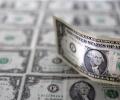
The United States offers an "abundance" of stability and transparency, which makes the world's largest economy an attractive investment destination for the Aditya Birla Group, a top official from the Indian conglomerate has said. Kumar Mangalam Birla said the group chaired by him has invested $15 billion in the US over the last 17 years, making it the biggest Indian investor in the country.
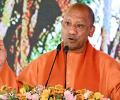
Uttar Pradesh Chief Minister Yogi Adityanath has hit out at the Opposition for initiating impeachment notices against Rajya Sabha chairman Jagdeep Dhankhar and Allahabad high court's Justice Shekhar Kumar Yadav, saying 'whoever speaks the truth' is threatened in this way.

Let's make some effort to make it come true and close the gender gap once and for all.

India's pharmaceuticals and medical devices industries are still hopeful that trade negotiations with the US could cut a fairer deal for both sides, after President Donald Trump announced a 25 per cent tariff rate on India on a social networking platform without divulging the finer details.

Kant, a retired 1980-batch Indian Administrative Service (IAS) officer of Kerala cadre, was appointed as India's G20 Sherpa in July 2022, months before India assumed the G20 Presidency.

The government emphasised that the country's credit strengths were 'much better' than most similar-rated economies.
While India has scored well on parameters like workforce and employment, it has fared poorly for health and wellness of its labour force, WEF said.

India on average lost 44.85 years of a lifetime due to Type 1 diabetes in 2021.
Sustaining 8-10 per cent growth will require lots of partnerships and some innovation says Lee Howell of the World Economic Forum.

Schwab is in New Delhi for the India Economic Summit, which has been organised by the WEF in partnership with Indian industry chamber Confederation of Indian Industry.
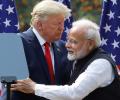
'Trump will absolutely back New Delhi on its position that Pakistan must do more to crack down on terrorists that threaten India.'
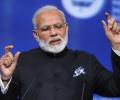
Modi is the first Indian prime minister to attend the Davos summit in 20 years.
India's ranking declined by three places to 59th position in the Global Competitiveness Index 2012 2013.

India needs a rebooting and the country must give "value to common sense" to tackle issues like slowdown of growth, feels CEO of Swiss FMCG giant Nestle, Paul Bulcke.

Srichand and Gopichand Hinduja emerged as the 66th richest in the world, as part of an Oxfam study released at the WEF.

His visit to India has been timed to coincide with the World Economic Forum on India in Gurgaon, Haryana on November 6.
According to the minister, India needs to expand its manufacturing sector to boost exports and ensure sustainability.
The 20th India Economic Summit to be held in New Delhi later this year will showcase India's advances and accomplishments in integrating with the global economy

Citing India's commitment to deep economic reforms and ease of doing business, Prime Minister Narendra Modi asserted on Monday that this is the best time to invest in the country as policy-making is focussed on the needs for the next 25 years for a 'clean and green' as well as 'sustainable and reliable' growth period. In his special address to the World Economic Forum's online Davos Agenda 2022 summit, Modi underlined a host of reform measures undertaken by his government to stress that it has worked to reduce the administration's interference in business by deregulating many sectors and to clear the way for free trade agreements with different countries. India was once associated with "license raaj", he noted and highlighted the measures, including reduction of corporate tax to boost business and doing away with over 25,000 compliance requirements.

Chinese foreign ministry spokesperson Hua Chunying said Chinese President Xi Jinping called for moving globalisation to a more open, inclusive, universal, balanced and win-win direction.

Bilateral trade target is $15 billion by 2015, says Premier Stephen Harper.
